Why the Roof Is One of the Biggest Wildfire Vulnerabilities — and What a Class A Upgrade Actually Costs
By the Cindera Team ·
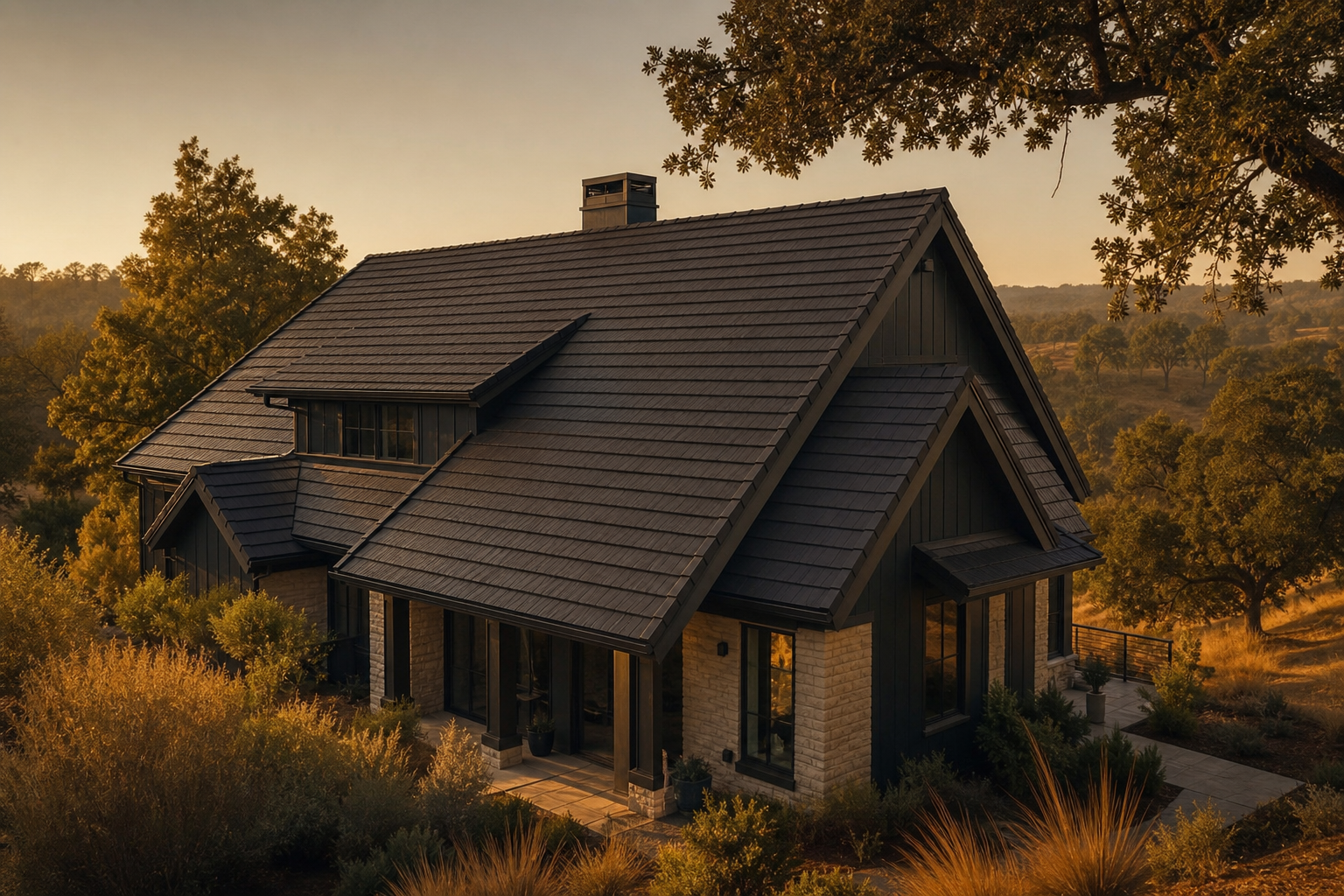
The roof is a first-order wildfire vulnerability because it takes the full brunt of ember exposure: embers land on it, gather in valleys and edges, and exploit gaps, debris, and weak intersections long before flame contact becomes the main problem. CAL FIRE describes the roof as one of a home’s most vulnerable areas, and FEMA calls it a critical component of building vulnerability in wildfire. ([1])
That is why homeowners often underestimate roof hardening compared with landscaping or siding. Much of the roof system is hidden from view, and a roof that looks tough from the ground can still have vulnerable vents, flashing, tile openings, gutter debris, or a covering that is not actually part of a Class A assembly.
Why the roof deserves more attention than most people give it
A roof is different from a wall. It is a broad landing surface for wind-driven embers, and its geometry creates places where debris accumulates and firebrands stay in contact with material long enough to ignite it. FEMA notes that valleys and roof-to-wall intersections collect combustible debris, and that actual wildfire exposure can be more severe than standardized fire tests. University of California wildfire guidance makes the same practical point in a homeowner-friendly way: ember exposure can last far longer than the flaming front itself. ([1])
That is also why a Class A label on the main covering is not the end of the story. Even a highly rated roof can still be vulnerable at edges, intersections, gutters, vents, skylights, and penetrations. As UC guidance puts it, Class A is not the same thing as wildfire-proof. ([1])
What Class A means in plain English
Class A is the highest standardized exterior-fire rating for a roof assembly. It is generally based on testing under ASTM E108 or UL 790, which look at how a roof performs when exposed to fire from outside the building. FEMA’s guidance is clear that the tested unit is the assembly, not just the top visible layer. That assembly can include the covering, underlayment or cover board, deck, insulation, and attachment method. ([1])
Homeowners usually mix up three different things:
| Term | What it means | Why it matters |
|---|---|---|
| Roof covering | The visible outer layer: shingles, metal panels, tile, membrane | Some products are Class A on their own, while others only qualify in a specified assembly |
| Roof assembly | The full tested combination beneath and behind the covering | Changing the deck, underlayment, or attachment method can change performance |
| Roof-system details | Valleys, flashing, edges, vents, gutters, skylights, penetrations, tile gaps | These are common ember entry points even when the covering is rated |
That distinction matters because a metal roof or tile roof is not automatically a Class A roof just because the material sounds noncombustible. Likewise, a Class A shingle does not automatically solve the weak points at the roof’s perimeter. FEMA cautions that a noncombustible covering or deck alone does not necessarily produce a Class A assembly. ([1])
The practical test homeowners should ask for
If you are comparing bids, ask for the exact listed assembly, not just the product name. You want to know:
- what the covering is;
- what underlayment or cover board is included;
- what deck it was tested over;
- how it is attached; and
- whether the installer is following the tested listing exactly.
That point is especially important for low-slope roofs. An August 2025 IBHS bulletin says a generic “Class A roof” note may be insufficient for single-ply membranes without the exact tested assembly and installation documentation. ([2])
What Cindera’s roof action data says
According to Cindera’s active hardening-action definitions, roof-related actions make up 8.4% of all defined hardening actions. Within that roof subset, 57.1% are easy, 28.6% are medium, and 14.3% are hard. That does not mean roof work is only 8.4% of wildfire risk; it means the platform’s roof actions form a relatively compact set that ranges from maintenance to one major capital project.
Cindera’s roof actions, ranked by potential score impact, are:
- Upgrade to Metal or Tile Class A Roof
- Verify Class A Fire-Rated Roof
- Verify Roof or Perimeter Sprinkler System
- Seal Roof Edge and Flashing Gaps
- Clear Roof Valleys and Corners of Debris
- Clear Gutters and Roof Valleys of Debris
- Remove Seasonal Roof Debris
That mix tells a useful story. Most defined roof work is not full replacement. It is verification, debris removal, and detail work. But the one capital project in the set — a full Class A upgrade — carries the highest score impact in Cindera’s current definitions.
Which roof coverings homeowners actually see in wildfire states
Asphalt-fiberglass composition shingles
Most modern asphalt-fiberglass shingles can be part of a Class A roof assembly. The important point is not that asphalt contains combustible material; it is that the tested system achieved the Class A standard. FEMA’s wildfire guidance explicitly recognizes that a Class A result can come from an assembly, not just from a particular material name. ([1])
For many homeowners, this is the best cost-to-performance option. Headwaters Economics’ 2024 California analysis estimated a Class A asphalt-fiberglass covering plus synthetic underlayment at $6.29 per square foot. In its simple example, replacing a 1,000-square-foot wood-shake roof with that assembly came to about $6,300 before hidden damage or add-ons. ([3])
The tradeoff is maintenance. Valleys, gutters, and flashing still need cleaning and inspection, and an aging shingle roof does not perform exactly like a new one tested in a lab. UC guidance notes that roof condition and age still matter. ([1])
Standing-seam metal
Metal roofing is popular because the covering itself is noncombustible. But that does not automatically make the installed roof Class A. FEMA notes that a qualifying metal system may still need a specific underlayment or cover board on a combustible deck, and that the complete tested assembly is what matters. It also warns that metal can conduct heat and may soften or melt under severe exposure. ([1])
Headwaters Economics estimated standing-seam metal plus fire-resistant synthetic underlayment at $18.68 per square foot in its California model — almost three times the asphalt-fiberglass baseline. ([3])
That means metal is not automatically the best wildfire purchase. It may make sense for homeowners who want durability, lower routine maintenance, or a specific architectural result, but wildfire resistance alone does not prove it is the highest-value next step for a serviceable Class A asphalt roof.
Clay and concrete tile
Clay and concrete tile can be part of Class A systems, but the tile itself is not the whole story. The main vulnerability is often the gap beneath the tiles at eaves, ridges, hips, and other edges, where embers and debris can reach underlayment or sheathing. Current wildfire-related codes increasingly require bird stopping, closure pieces, or other protection at those openings. ([4])
Tile also raises a different issue: weight. Switching to tile may require structural review or deck modifications, which can move a project from a simple reroof into a more expensive reconstruction scope. Broken or displaced tiles are not just cosmetic problems; they can create direct ignition pathways.
Low-slope membranes and other special assemblies
Flat and low-slope roofs need separate attention. A membrane name by itself is weak evidence of wildfire performance. IBHS’s 2025 bulletin says single-ply membranes need to be part of a listed Class A assembly, with exact documentation of the membrane, cover board, insulation, deck, and attachment method. ([2])
For homeowners with low-slope roofs, this is one of the clearest reasons documentation matters: the product label alone may not be enough to prove the roof is actually Class A.
What a Class A upgrade actually costs
The most defensible cost baseline in current research is the 2024 Headwaters Economics analysis for California. It used contractor and architect review plus cost data and regional assumptions. In that model:
- Class A asphalt-fiberglass covering plus synthetic underlayment: $6.29/sq. ft.
- Standing-seam metal plus fire-resistant synthetic underlayment: $18.68/sq. ft.
- Metal drip edge: $2.93/linear ft.
- Ember-resistant ridge vent with baffle: $33.77/linear ft.
- Metal gutter guard: $4.48/linear ft.
- Metal gutter system: $18.78/linear ft.
- Standard fixed flat-glass skylight replacement: about $1,435 each ([3])
That same report’s simple 1,000-square-foot shake-to-asphalt example was about $6,300. But the report also makes clear that concealed damage, structural repair, and a range of roof-specific details were not included in that simplified number. ([3])
Why reroofing is usually more than a covering swap
A real Class A reroof often includes:
- tear-off and disposal;
- deck inspection and repairs;
- underlayment;
- any required cap sheet or cover board;
- valley work;
- flashing and edge metal;
- vent replacement or resizing;
- tile closure pieces or bird stops if applicable;
- skylight and penetration rework;
- permit and final inspection.
That is why a simple overlay or recover is not a universal cheaper substitute. California’s existing-building code treats roof replacement and roof recover as different scopes, and manufacturer instructions or local code may limit when an overlay is even allowed. ([5])
A practical way to think about it: the visible roof covering may be the biggest line item, but the details are often what determine whether the roof actually performs in a wildfire.
The hidden cost of not upgrading
A roof that is not Class A — or is Class A on paper but weak at edges, valleys, or vents — can undermine otherwise good hardening work. Embers can bypass a strong wall, ignite roof debris, enter through a vent, or exploit a roof-to-wall transition. NIST’s structure-hardening guidance is blunt about the broader point: a single vulnerability can lead to structure destruction. ([3])
That does not mean other measures are useless. It means wildfire resilience is only as strong as the weakest pathway. A homeowner who spends on defensible space, noncombustible zone work, or ember-resistant vents still benefits from those investments. The point is that a vulnerable roof can cancel out some of that gain.
It also matters for insurance. California’s Department of Insurance says insurers using wildfire risk in their rating plans must provide separate credits for mandatory Safer from Wildfires mitigation factors, and a Class A roof is one of those factors. But the rules do not guarantee a policy, a renewal, or a specific discount level for a roof alone. ([6])
A March 2026 California Department of Insurance briefing reported wildfire-mitigation discounts ranging from 4% to 40% across insurer offerings and mitigation packages. That range is not roof-specific, but it is a good reminder that underwriting value exists without being predictable. The California FAIR Plan also says qualifying mitigation can earn discounts on the wildfire portion of the premium, up to 20%. ([7])
A homeowner decision framework
Replace now when:
- the roof is untreated wood shake, unrated, or cannot be verified as Class A;
- the roof is near the end of its normal service life anyway;
- there are widespread defects that make spot repair a poor use of money;
- an insurer, permit, or grant condition creates a trigger now;
- a low-slope roof cannot be tied to a listed Class A assembly;
- you are already opening the roof for solar or major remodeling.
Pair replacement with detail upgrades when:
- the covering is coming off anyway;
- valleys, flashing, drip edge, and roof-to-wall transitions can be rebuilt at the same time;
- you can improve vents, gutter treatment, skylights, and penetrations while the roof is open.
Those details are hard and expensive to retrofit after the fact. If you are already reroofing, this is the moment to fix them.
Wait for the normal replacement cycle when:
- the roof is already a documented Class A assembly;
- the deck and covering are still in good condition;
- only maintenance-level issues need correction;
- no insurer or code trigger is forcing the issue now;
- your limited budget would reduce more urgent vulnerabilities elsewhere on the parcel.
CAL FIRE’s own guidance frames the covering upgrade as something to do when it is time to replace the roof, while emphasizing debris removal and gap closure in the meantime. ([1])
What to ask before you sign a reroof contract
Ask each bidder:
- What exact Class A listing applies to the complete assembly?
- Does it assume a combustible or noncombustible deck?
- What underlayment or cover board is included?
- Is tear-off included?
- How much deck repair is included before change orders start?
- How will valleys be built?
- Are drip edge and roof-to-wall flashing included?
- What happens to ridge, soffit, gable, and off-ridge vents?
- How will tile or metal profile openings be closed?
- Are solar removal and reinstallation included?
- Will you provide product labels, listing numbers, photos, permits, and final inspection records?
Documentation is part of the hardening work
This is one of the places homeowners most often lose value. Underwriters, grant programs, inspectors, and future buyers may care as much about proof as about the work itself.
Keep:
- the signed contract and full scope of work;
- product labels and model names;
- the exact assembly listing or evaluation report;
- photos of product wrappers and labels before installation;
- photos of the deck after tear-off;
- photos of the concealed layers as installed;
- photos of valleys, flashing, vents, tile closures, and penetrations;
- permits and final inspection approval;
- itemized final invoices and proof of payment;
- any insurer inspection, score update, or discount determination.
IBHS’s low-slope bulletin is useful here because it says an approved plan shows intent, not necessarily execution. A permit alone is often not enough proof that the installed roof matches the tested assembly. ([2])
California homeowners should also check the state’s Building Materials Listing when they are verifying product eligibility. ([8])
Grant documentation matters too
California’s new Safe Homes grant framework, created by AB 888, makes roof replacement the first listed funding priority. But the law does not guarantee a grant amount or automatic availability; current funding and launch status still have to be checked before a homeowner relies on it. The statute also requires follow-up documentation, including receipts, attestation, and evidence tied to insurance incentives. ([9])
The bottom line
The strongest homeowner strategy is not “buy the most expensive roof.” It is to buy a verified Class A assembly, then use the reroofing project to close ember pathways at edges, valleys, vents, and intersections. In many cases, a well-documented Class A asphalt roof is the best value. In other cases, a metal or tile project makes sense because of age, structure, or design needs. The expensive mistake is paying for a Class A label without specifying, installing, and documenting the complete system.
According to Cindera’s action data, most defined roof work is still verification and maintenance, even though the full Class A upgrade has the highest score impact. That is a useful homeowner sequence: verify, maintain, repair details, and replace when condition, code, insurance, or remaining service life makes replacement the rational next step.
What to do next
Check your property at /score to see how roof-related work fits into your overall wildfire-risk profile. If you are in a wildfire-prone state, also review your state’s grants and vendor options before you ask for reroof bids, because documentation, timing, and scope can change the economics of the project.
Sources
- FEMA - Wildfire Hazard Mitigation
- IBHS - Technical Bulletin WP 2025-01
- Headwaters Economics - Retrofitting a Home for Wildfire Resistance
- Boulder County - Ignition-Resistant Construction PDF
- dgs.ca.gov
- California Department of Insurance - FAQ: Mitigation in rating plans and wildfire risk models regulation
- California Department of Insurance - Rebuilding With Wildfire Safety and Insurability Briefing
- California Department of Insurance - Safer from Wildfires
- insurance.ca.gov
- California Building Standards Commission - Codes
- California AB 888
- Boulder County - Ignition Resistant Construction - B37 (effective July 1, 2026)
- California FAIR Plan
- Headwaters Economics - The cost of retrofitting a home for wildfire resistance
- California Department of Insurance - What does being Safer from Wildfires