Defensible Space Zones 1 and 2: The Vegetation Work That Actually Changes Outcomes
By the Cindera Team ·
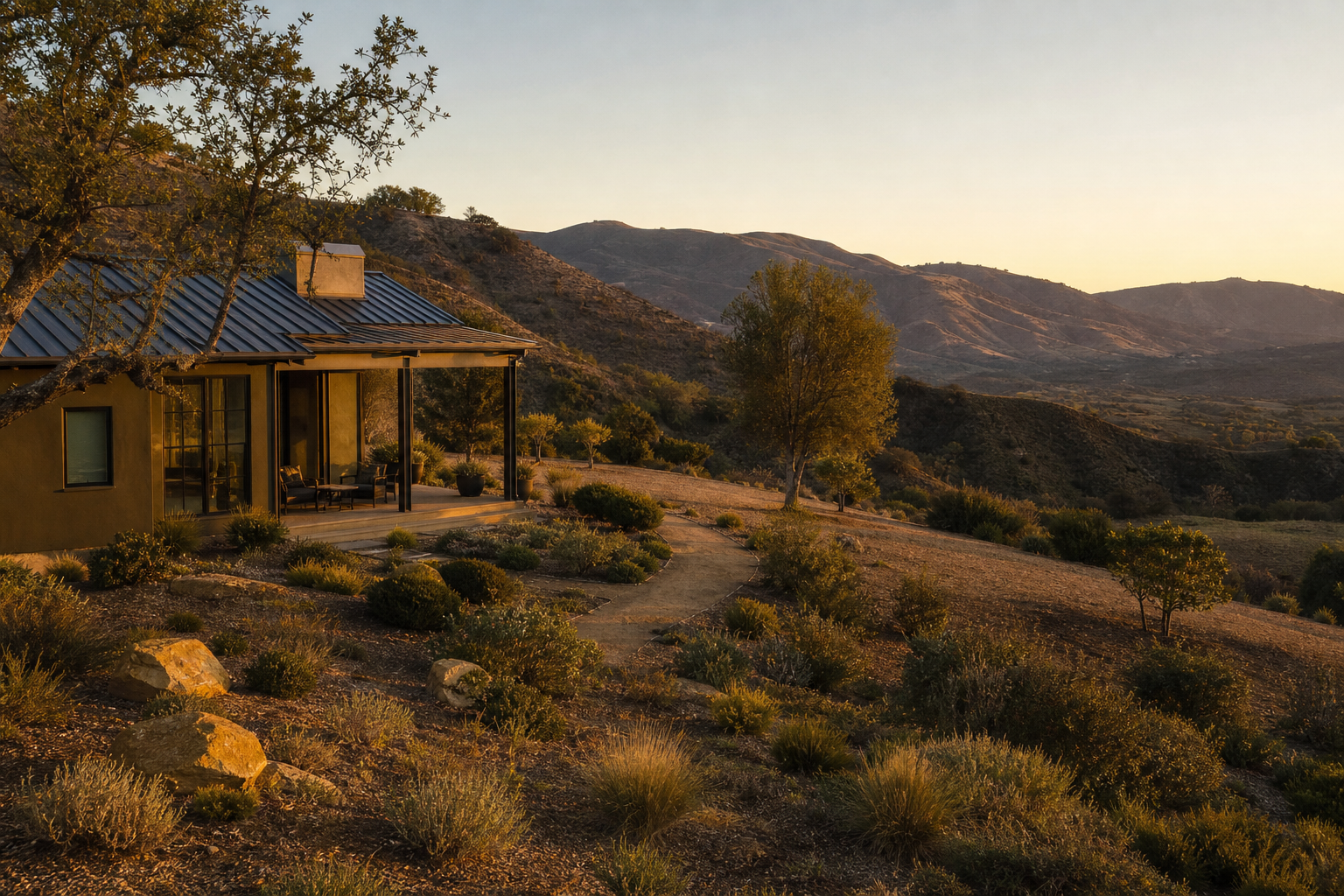
Homeowners hear a lot about defensible space, but not all yard work has the same effect. The most consequential vegetation work is in the bands closest to the structure, where dead material, connected shrubs, low branches, and combustible storage can create the shortest path from a wildfire to a house. California’s legal framework still requires 100 feet of defensible space where applicable, with more intense fuel reduction closer to the home. ([1])
Why Zones 1 and 2 matter most
The simplest way to think about defensible space is this: the close-in area is about stopping embers and flames from finding something easy to ignite, while the outer area is about breaking up fuel so fire cannot move in a continuous path toward the home. California law requires defensible space of 100 feet from a structure, but not beyond the property line, and it directs that fuel management should be more intense between 5 and 30 feet from the structure. ([1])
California and federal guidance do use slightly different zone labels, so it helps to stay focused on the work rather than the label. CAL FIRE still presents Zone 1 as the first 30 feet and Zone 2 as the area out to 100 feet, while newer state materials increasingly separate out a 0–5 foot ember-resistant band near the home. For most homeowners, the practical takeaway is the same: the most important vegetation work is closest to the structure, then it becomes a fuel-fragmentation job as you move outward. ([2])
That framing matters because embers are a major ignition mechanism in wildfires. FEMA’s U.S. Fire Administration says embers can be carried several miles downwind, and those embers can ignite the structure itself or the landscape around it. In other words, defensible space is not a cosmetic yard standard; it is an ignition-management strategy. ([3])
Zone 1: the work that changes the odds near the house
Zone 1 is where homeowners get the biggest return on effort. This is the band where vegetation can directly touch the structure, catch embers, or create a ladder that carries fire upward. California guidance emphasizes that defensible space is a buffer created by removing dead plants, grass, and weeds, and FEMA says the close-in landscape can materially improve home survival when it is maintained properly. ([2])
Start with dead material
If you have only one weekend, start by removing dead material. That means dead leaves, pine needles, dry grass, dead shrubs, dead branches, and any plant material that has already cured into easy ignition fuel. This is the most obvious and most defensible first step because it removes the easiest ignition sources before you spend time on finer landscaping decisions. CAL FIRE and FEMA both prioritize this kind of cleanup. ([2])
Break up continuous shrubs
A tidy shrub bed can still be a fire pathway if it is continuous. What matters is not whether the bed looks neat; what matters is whether flame can move across it without interruption. USFA and CAL FIRE both stress spacing between shrubs and between shrubs and trees, because disconnected plantings are harder for fire to travel through. ([2])
Create horizontal and vertical spacing
Spacing is the real work in Zone 1. CAL FIRE’s guidance shows that horizontal spacing depends on slope and plant height, and it gives a clear example: a 5-foot shrub near a tree needs 15 feet of clearance between the top of the shrub and the lowest tree branch. That is the kind of detail that matters because it explains why a yard can look green and still be hazardous if the vegetation is vertically connected. ([2])
Vertical separation is just as important. Ladder fuels are the lower shrubs and branches that let fire climb from the ground into the canopy. FEMA and CAL FIRE both recommend pruning trees and removing ladder fuels so fire stays low and does not move upward through the landscape. ([3])
Keep combustible items away from vegetation
The vegetation zone is not the place for firewood, lumber, patio cushions, swing sets, or other combustible items. Those materials can ignite vegetation or become part of the fire path. USFA specifically advises moving woodpiles away from the home, and CAL FIRE says firewood and lumber should be relocated to a safer outer area. ([3])
Zone 2: where the goal is fuel fragmentation, not bare dirt
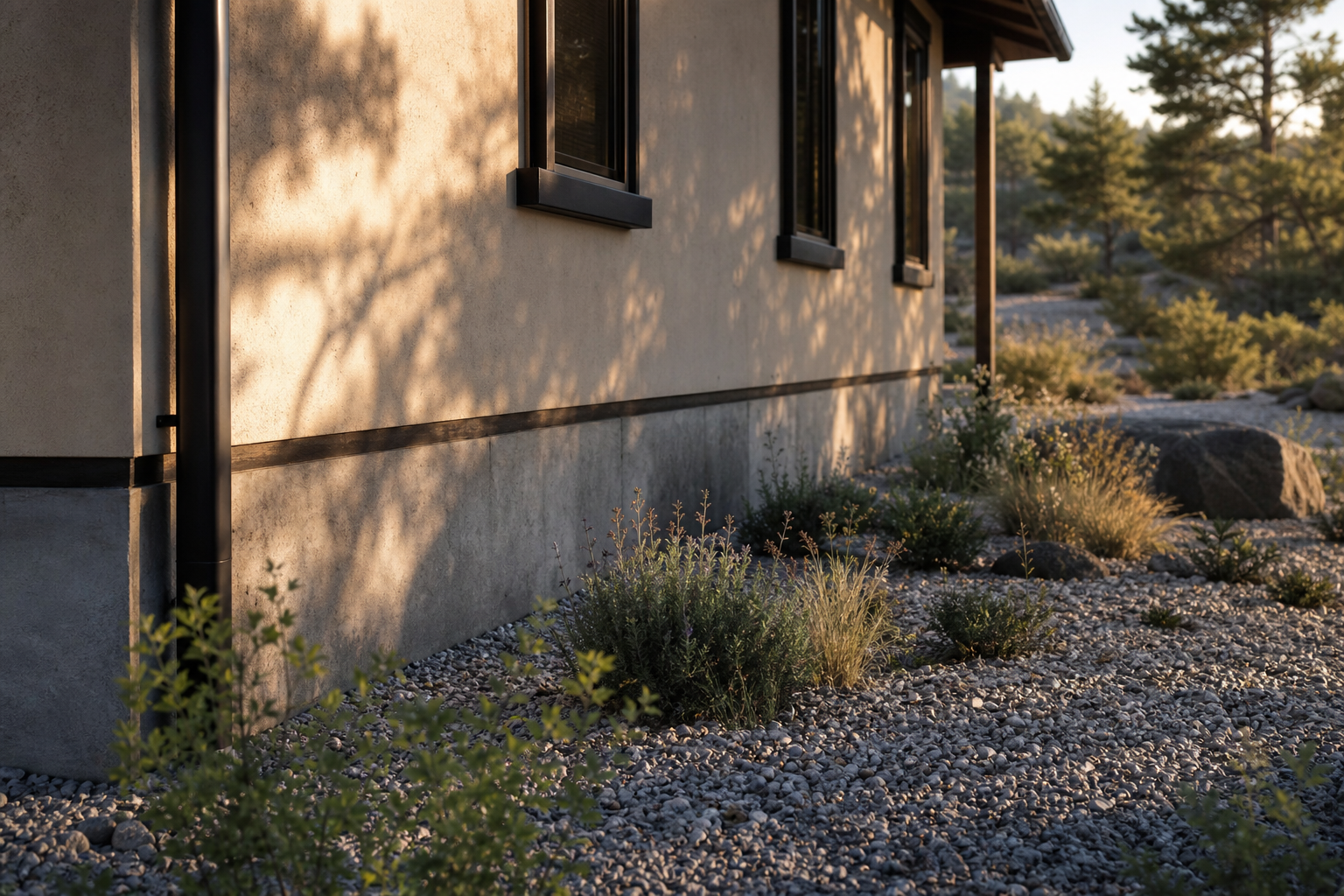
Zone 2 is often misunderstood as a place where homeowners should simply clear everything out. That is not the goal. The goal is to break continuity, thin dense fuel, prune low growth, and keep fire from finding a connected route through the landscape. California’s 100-foot rule still governs where applicable, but the outer band is about reducing the intensity and connectivity of fuels rather than sterilizing the land. ([1])
Thin dense brush and reduce continuity
If Zone 1 is about ignition prevention near the structure, Zone 2 is about slowing spread. Dense brush patches should be thinned so fire cannot race through a single uninterrupted fuel bed. CAL FIRE and FEMA both emphasize spacing and separation as the basic structure of defensible space. ([2])
Prune and remove ladder fuels
Zone 2 still matters for ladder fuels. Low branches under trees, brush beneath canopy edges, and mixed layers of vegetation can all help fire move vertically. USFA advises pruning trees and removing vegetation under trees, and CAL FIRE’s slope-sensitive spacing guidance reinforces the same point. ([3])
Manage leaf litter and dead debris
The outer zone is not just about shrubs and trees; it is also about the ground layer. Leaf litter, dead branches, and dry debris can carry flame on the surface and feed spot ignitions from embers. USFA and CAL FIRE both call for regular cleanup of dead or dry vegetation and ground litter. ([3])
Store fuels away from the house
Wood storage belongs in the outer part of the defensible-space system, not adjacent to the structure. USFA says woodpiles should be at least 30 feet from the home, on bare or gravel areas or in an enclosed shed. That is a useful practical rule because it turns a vague “keep stuff away” instruction into a specific placement decision. ([3])
Respect slope
Slope changes everything. CAL FIRE notes that spacing depends on slope, and slope is important because heat rises and can preheat vegetation uphill from a fire. If your property is steep, the same shrub arrangement that seems acceptable on flat ground can become a much bigger problem uphill. ([2])
What does not move the needle much
A lot of landscaping advice sounds sensible but does not do much on its own.
Cosmetic mowing alone is not enough
Mowing can help, but mowing alone is not defensible space. USFA treats mowing as one part of a broader fuel-management system, not as a substitute for spacing, pruning, and dead-material removal. A short lawn with connected shrubs, low branches, and combustible items nearby can still transmit fire. ([3])
Isolated pruning without spacing is weak
If you prune one tree but leave adjacent shrubs touching it, or trim branches but keep the canopy connected, the fire pathway still exists. CAL FIRE and USFA both emphasize separation between plant groups, not just cleaner-looking individual plants. ([3])
Tidy can still be hazardous
A landscape can look maintained and still be dangerous if it preserves continuous fuel. NIST has found that fences and mulch can act as bridges for fire spread or as launch points for ember ignition. The lesson is simple: visual order is not the same thing as ignition resistance. ([3])
Firewise plants are not fireproof
Plant selection matters, but no plant is fireproof. Lower-flammability plants help only when they are spaced correctly and maintained well. The important question is not whether a plant is marketed as firewise; it is whether it creates a continuous path for heat and flame. ([3])
A homeowner decision framework
The right project depends on how much time you have and what your site looks like.
If you have one weekend
Start with the highest-probability wins:
- remove dead leaves, needles, and branches;
- clear dry debris under shrubs and trees;
- cut back low branches and obvious ladder fuels;
- move firewood, lumber, and patio combustibles away from the home;
- remove fuel bridges like shrubs touching the structure or touching a fence attached to the house. ([3])
If you have a full project
Then move outward and work on structure:
- separate shrubs from one another;
- increase vertical spacing between shrubs and trees;
- thin dense brush patches;
- fragment continuous fuel beds in the outer zone;
- relocate storage and combustible materials to safer locations. ([3])
If the site is steep or heavily wooded
Prioritize slope and continuity. On steep ground, fire behavior can intensify quickly, and continuous fuel layers become more dangerous. If the parcel is short of 100 feet, California law says defensible space stops at the property line, which makes coordination with neighboring parcels more important. ([1])
Why this is not just landscaping advice
California’s defensible-space law is not asking homeowners to clear land for appearance. It is asking them to manage fuels so a wildfire is less likely to ignite the structure. The statute says the amount of fuel modification should consider the flammability of the structure and the surrounding vegetation, and it specifically ties the 100-foot standard to maintaining conditions in which wildfire would be unlikely to ignite the structure. ([1])
That distinction matters because the best yard on the block is not necessarily the safest. The safer yard is the one that interrupts ember catch, breaks flame contact, and removes the vertical and horizontal connections that let fire move toward the home.
What Cindera sees in live vegetation-support programs
According to Cindera’s grant database, open vegetation-management support is not limited to one program type or one state. In the current dataset, California stands out with the broadest mix of open county free services, state grants, county loans, cost-share programs, insurance discounts, and city-level support among the visible vegetation-related offerings. Cindera also finds that some of these programs are income-restricted, including a California state grant line that is fully income-restricted and a California county loan line that is partly income-restricted. Because this comes from Cindera’s internal database, it is best understood as a directional market read rather than a public program census.
That matters for homeowners because vegetation work is often the kind of hardening project that sounds simple until you price labor, hauling, tree work, and slope access. If the work goes beyond a weekend, grants or vendor help can make the difference between delaying and actually finishing the project.
A practical way to sequence the work
If you are deciding where to start, use this order:
- Remove dead material and obvious ignition sources in the first zone.
- Break up shrubs and cut ladder fuels near the structure.
- Increase spacing and thin dense fuel in the outer zone.
- Deal with slope, wood storage, and fuel bridges last only if the first three steps are already in motion.
That order reflects where vegetation work is most likely to change outcomes. The closer the work is to the home, the more likely it is to affect ember ignition and immediate flame contact. The farther out you go, the more the work becomes about disruption, spacing, and fuel fragmentation.
What to do next
First, check your parcel’s wildfire score and compare it with the defensible-space requirements that apply in your area. Then review local obligations and see whether your property is in the State Responsibility Area or a mapped fire-hazard zone where enforcement and insurance scrutiny are more likely to be active.
If the work is bigger than a weekend, use Cindera’s grant directory at /grants and, if you need labor, the vendor directory for your state at /vendors/ca. You can also start with a free parcel check at /score.
Sources
- California Legislature - Public Resources Code Section 4291
- CAL FIRE - Defensible Space
- U.S. Fire Administration / FEMA - Protecting structures from wildfire embers and fire exposures
- California Board of Forestry and Fire Protection - Defensible Space Zones - 0, 1, and 2
- California Office of the State Fire Marshal - Wildland Hazards and Building Codes
- California Office of the State Fire Marshal - Community Wildfire Risk
- U.S. Fire Administration / FEMA - Wildland-Urban Interface Healthy Landscapes
- U.S. Fire Administration / FEMA - Doing the little things makes a difference in wildfire safety
- National Institute of Standards and Technology - Wildfire hazards in residential fences and mulch beds
- California Office of the State Fire Marshal - Fire Hazard Severity Zones