California’s Home Hardening Grants: What’s Available, How Much They Cover, and Where the Gaps Are
By the Cindera Team ·
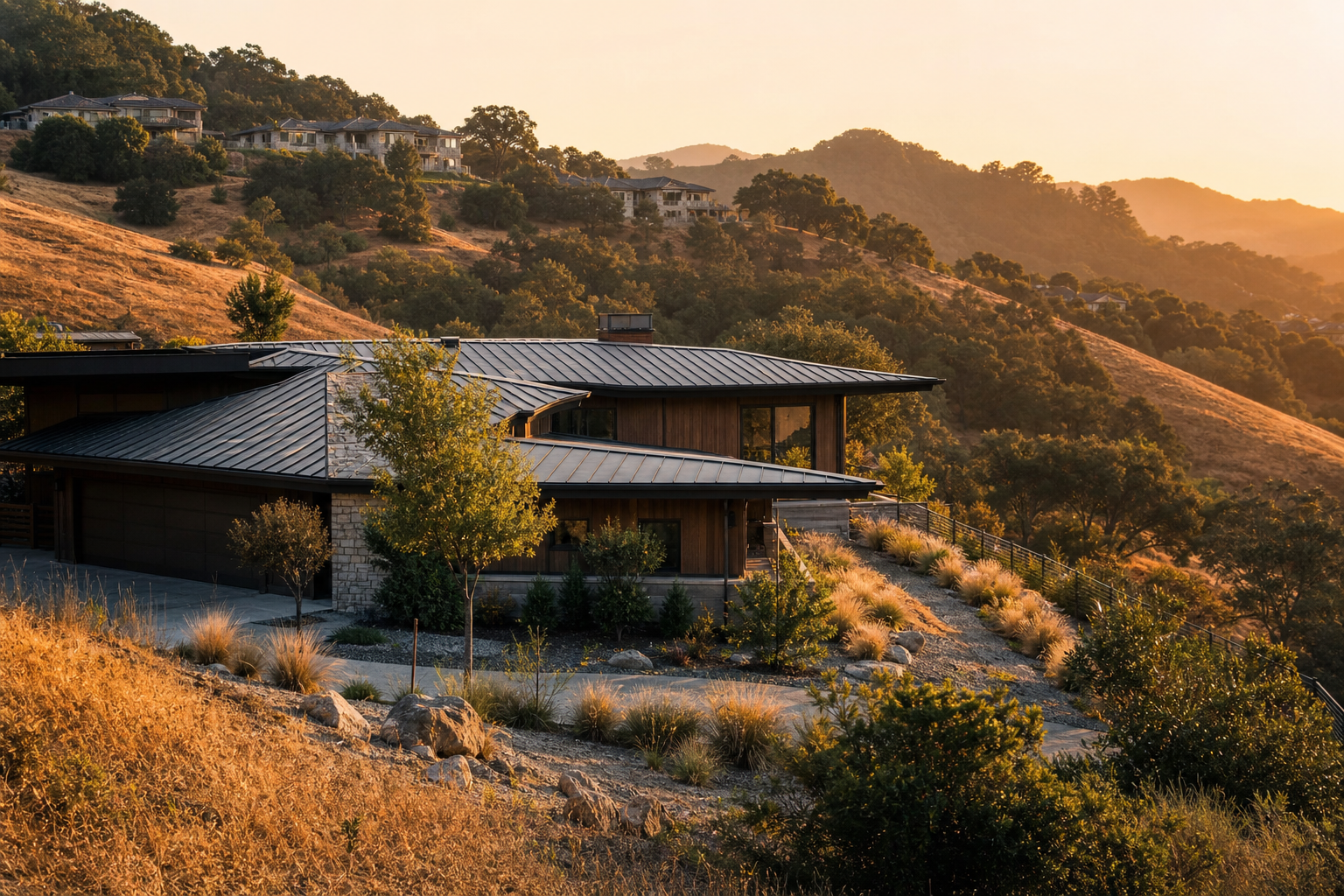
California homeowners looking for wildfire hardening money run into the same problem again and again: the programs exist, but they do not work the same way. Some are grants, some are free services, some are rebates or cost-share arrangements, and the most useful statewide program is only open in selected project areas at a time. According to Cindera’s grant database as of July 2026, that patchwork matters because the biggest challenge is not just finding a program—it is finding one that actually pays for the work you need, when you need it.
The good news is that California does have a meaningful hardening funding ecosystem. The harder truth is that most of it is designed to offset targeted wildfire mitigation, not to cover a full roof-to-yard retrofit. CAL FIRE’s own guidance makes clear that home hardening and defensible space work together, and the California Department of Insurance says its wildfire resilience framework can also affect insurance discounts. But grants and discounts are different financial tools, and homeowners often need to use them together rather than assuming one program will cover everything. [1] [2]
What California wildfire hardening programs are, and what they are not
This article focuses on direct or near-direct homeowner support in California that Cindera tracks: grants, rebates, cost-share programs, free services, and similar hardening incentives. It does not treat general disaster aid, insurance claims, or broad community recovery funding as wildfire hardening grants.
That distinction matters because the homeowner-facing decision is usually practical: can this money help pay for vents, a Class A roof, defensible space, windows, gutters, or another specific retrofit? Or is it really a narrow rebate, an inspection service, or a project-area pilot?
CAL FIRE describes home hardening as using fire-resistant building materials, safe landscaping, and preventative measures to reduce wildfire ignition from flames, radiant heat, and embers. Its guidance also ties hardening to defensible space, which it treats as a separate but complementary layer of protection. [1] [3]
The California Wildfire Mitigation Program is the clearest current example of a state-level assistance program with that kind of layered purpose. Cal OES says it was created with CAL FIRE to support structure hardening, retrofitting, defensible space, and vegetation management, with a focus on vulnerable populations in wildfire-prone areas. [4]
The big picture: California’s funding mix is more fragmented than most homeowners realize
According to Cindera’s grant database as of July 2026, California wildfire-related home hardening programs are dominated by free-service offerings. Grants are present, but they are a smaller share of the tracked landscape. Rebates, cost-share programs, loans, and tax credits exist too, but they are less common. Insurance discounts also show up in the mix, though they are not grants and should not be treated like grant dollars.
That matters because the homeowner-facing experience is often built around the headline word “grant,” while the actual funding landscape is much more mixed. Cindera’s data shows that many of the programs homeowners can find are not cash-for-any-hardening-work programs; they are narrower tools aimed at one stage of the mitigation process, such as a free assessment, a vegetation service, or a targeted retrofit aid package.
The same database shows that funding status is not stable. Some programs are open, some upcoming, some closed, and some are listed as unknown. That makes timing part of the access problem: a homeowner may find a program category that looks useful and still discover that applications are not currently open in their area.
What the money actually covers
Homeowners usually do not need a grant description; they need to know what it buys.
Cindera’s data shows that California programs most often fund or support a small number of hardening categories, especially defensible space and vegetation work. That lines up with CAL FIRE’s guidance, which emphasizes the combination of home hardening and defensible space rather than either one alone. [3] [5]
On the structural side, CAL FIRE identifies several concrete upgrades that matter most in wildfire survival:
- Class A roofing for roof replacement or reroofing projects. CAL FIRE says California requires roof coverings and assemblies to be Class A-rated. [1]
- Ember-resistant vents or vent openings protected with noncombustible mesh in the proper size range. CAL FIRE warns that larger openings are vulnerable to ember entry. [1]
- Noncombustible gutter covers and regular gutter cleaning. [1]
- Upgraded windows, especially where older single-pane windows are present. CAL FIRE says double-pane tempered glass is far more resistant to breaking during wildfire exposure. [1]
- Defensible space and vegetation management, including debris removal from roofs, gutters, decks, and under structures. [5]
Cindera’s California program data shows that the most common funded or supported action category is defensible space / vegetation, followed by verification, maintenance, and confidence-building services. Structural hardening appears as well, but often in combination with other categories rather than as a stand-alone, full-home retrofit package.
One useful plain-English takeaway: many programs help with the edges of the retrofit, not the whole thing. A homeowner might get help for clearing vegetation, adding ember-resistant vents, or improving a specific vulnerable component, but still have to pay separately for roof replacement, window upgrades, or siding work.
The gap between headline amounts and real retrofit costs
The biggest misunderstanding homeowners have is assuming that a wildfire grant is large enough to pay for a full hardening project. Most of the time, it is not.
The strongest current statewide figure in official California material comes from the California Wildfire Mitigation Program. A March 2026 status report describes assistance of up to $40,000 for homeowners earning up to 120% of area median income. That is meaningful money, but it is still best understood as targeted retrofit support, not open-ended financing for every hardening item a home might need. [6]
Cindera’s database reinforces that point. California wildfire programs are frequently limited to a single category of work, a defined benefit structure, or a capped reimbursement amount. In the tracked set, open grants average far below what a broad whole-home project would typically require, while rebates and other smaller aid types are smaller still.
In practice, that means the money is often enough to make one or two major mitigation steps affordable, but not enough to solve the entire home-hardening bill by itself. A homeowner replacing a roof, upgrading windows, and improving vents will still face a large out-of-pocket gap in most cases.
Where the gaps are
The gaps are not just financial. They are program-design gaps.
1) Programs are narrow by design
A homeowner may find a program that pays for defensible space but not structure hardening, or a service program that offers an assessment but no construction money. That is not a bug; it is how many of these programs are built.
Cindera’s database shows that defensible-space-related work is the most common benefit category in California wildfire programs, while broader retrofit bundles are less common. That means the market is more prepared to pay for vegetation management than for a full home envelope upgrade.
2) Income restrictions are common
Cindera’s data shows that a substantial share of the tracked California programs are income-restricted. In practical terms, that means many homeowners who are technically at risk may still not qualify if they are above a program’s income threshold.
For the homeowner, that can be frustrating because the need is real regardless of income. But program design often follows policy goals: limited dollars are directed toward households that would otherwise struggle to fund mitigation on their own.
3) Project-area rules matter
Even the most important state program is not open everywhere. The CWMP homeowner page says applicants must be legal property owners in a current project area, and applications are only accepted for properties located within those project areas. As of the current page, El Dorado County’s Weber Creek and Lake County’s Kelseyville Riviera are accepting applications, while the San Diego County project area covering Campo, Dulzura, and Potrero is not. [7]
That is a major practical limitation. A program can be “active” in California and still be unavailable to most homeowners.
4) Open vs. closed status changes quickly
Cindera’s database and the CWMP both show why homeowners should verify current status before planning a project around expected grant funding. A program that is open this month may be closed next month, or open in one county and shut in another.
Where California programs cluster
Cindera’s tracked California wildfire hardening programs are concentrated in a handful of counties, especially Los Angeles, Contra Costa, San Diego, Sacramento, Fresno, Del Norte, Orange, San Bernardino, Riverside, and Alameda.
This does not mean those counties are necessarily the highest-risk counties in the state. It means they are the most represented in the tracked program set. The concentration likely reflects where local agencies, utility partners, or pilots have created programs, not just where hazard is highest.
The broader geography also matters because fire hazard maps themselves are not static. The Office of the State Fire Marshal says Fire Hazard Severity Zones are based on hazard factors such as vegetation, terrain, flame length, blowing embers, and fire weather, and that the maps classify areas as moderate, high, or very high hazard. [8]
Eligibility friction: why many homeowners never reach the finish line
Eligibility is often the real bottleneck.
The California Wildfire Mitigation Program requires homeowners to be the legal property owner, to participate in a home assessment, and to sign a right-of-entry agreement for approved site work. It also limits applications to properties in current project areas. [7]
For many homeowners, that means a grant is only available if four separate conditions line up:
- you own the property,
- you live in an eligible area,
- you meet the income or vulnerability criteria,
- and the application window is open.
Other California programs tracked by Cindera add their own filters, such as owner occupancy, local geography, or specific service criteria. That is why the most important first question is often not “what can I get?” but “am I eligible for anything at all?”
Hazard-zone status is also a common friction point. OSFM says Fire Hazard Severity Zones are a hazard mapping tool, not an individualized parcel risk score, but many programs use that framework to decide where money goes. [8]
What this money can buy, in plain English
Here is the simplest way to think about the funding categories California homeowners are most likely to encounter:
- Ember-resistant vents: often eligible in broader mitigation or retrofit programs because vents are a common entry point for embers. CAL FIRE specifically recommends flame- and ember-resistant venting approaches. [1]
- Class A roofs: more likely to be covered in broader retrofit bundles or replacement-related programs than in small rebate programs. CAL FIRE says California requires Class A roofing for roof coverings and assemblies. [1]
- Noncombustible gutter covers: commonly part of home hardening guidance, but not always separately funded. [1]
- Defensible space / vegetation clearance: the most common category in Cindera’s California program database and the most likely to appear in free-service or cost-share formats. [5]
- Zone 0 work: a useful shorthand for the immediate area around the structure, but California programs may describe the same work as vegetation management, defensible space, or site hardening instead of using the Zone 0 term. The Insurance Institute for Business & Home Safety updated its Wildfire Prepared Home standard in June 2025 to emphasize a 0–5 foot noncombustible zone and ember-resistant vents. [9]
- Inspection, verification, and maintenance services: frequently funded, and often easier to access than construction dollars.
The point is not that every program pays for every item. The point is that the most useful programs tend to pay for the items that break wildfire vulnerability down into manageable pieces.
Recent developments that change the homeowner playbook
Three recent changes matter for anyone comparing grants in 2026.
First, OSFM says Fire Hazard Severity Zone mapping continued to roll out in phases in 2025, which means local awareness, eligibility conversations, and disclosure issues are still evolving. [8]
Second, IBHS updated its Wildfire Prepared Home standard in June 2025, sharpening the national best-practice benchmark around ember-resistant vents and the immediate noncombustible zone around a home. That gives homeowners a stronger technical reference point when they are deciding which upgrades are worth pursuing first. [9]
Third, the CWMP remains project-area specific in 2026, so homeowners cannot assume state wildfire funding is broadly available statewide. They have to check the current status for their county and project area. [7]
California’s insurance framework also matters. The Department of Insurance’s Safer from Wildfires program says homeowners can qualify for insurance discounts by taking layered mitigation steps. That is not grant money, but it can change the economics of a retrofit if the same work helps both grant eligibility and insurance pricing. [2]
What homeowners should do next
If you have limited time, start with eligibility. Check whether your property is in a current project area, whether your income or occupancy status fits the program, and whether the application window is open.
If you already have a retrofit in mind, match the work to the most likely funding source: defensible space and vegetation work to free-service or cost-share programs, vents and structural upgrades to broader retrofit programs, and project-area pilots for more comprehensive help.
If you live in a high-risk area, pair grant hunting with your parcel’s wildfire score so you are not just chasing dollars—you are prioritizing the upgrades that reduce the most risk. You can start with your property at /score.
Sources
- CAL FIRE - Home Hardening
- California Department of Insurance - Safer from Wildfires
- CAL FIRE - Get Ready
- California Governor’s Office of Emergency Services - California Wildfire Mitigation Program
- CAL FIRE - Defensible Space
- California Governor’s Office of Emergency Services - California Wildfire Mitigation Program Authority Status Report 03.2026
- California Governor’s Office of Emergency Services - CWMP Homeowner Page
- Office of the State Fire Marshal - Fire Hazard Severity Zones
- Insurance Institute for Business & Home Safety - Updated Wildfire Prepared Home Standard